Open Events → Edit event → Tickets, then create or edit a ticket. The main editor uses Details, Pricing & Access, Sales & Capacity, Check-in, Autopilot, and Seat Categories. The custom day editor groups the same subjects into expandable sections with some additional fee controls.

Event-level ticket settings
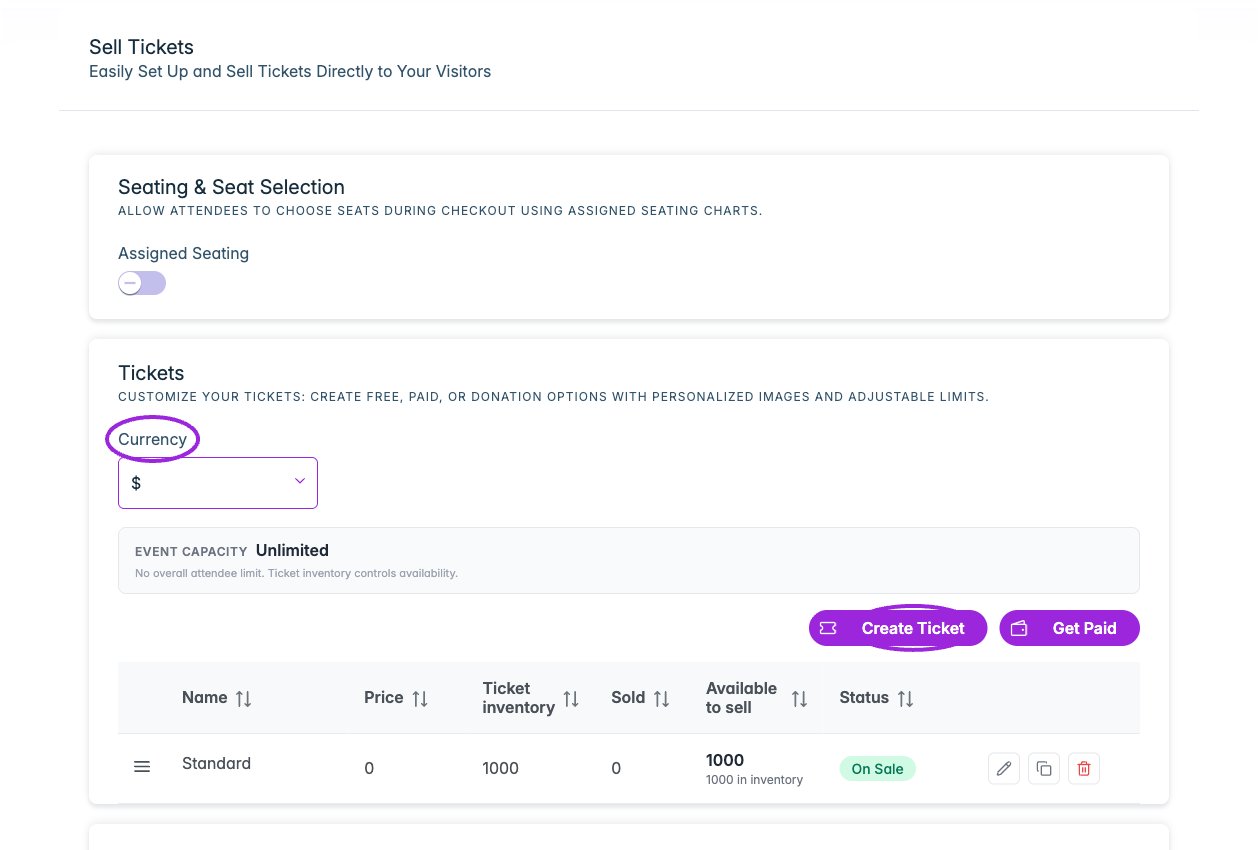
Tickets contains seating setup, currency, event capacity, the ticket list, and promo codes. Create Ticket opens the full ticket editor.

Tickets contains seating setup, currency, event capacity, the ticket list, and promo codes. Create Ticket opens the full ticket editor.

Details
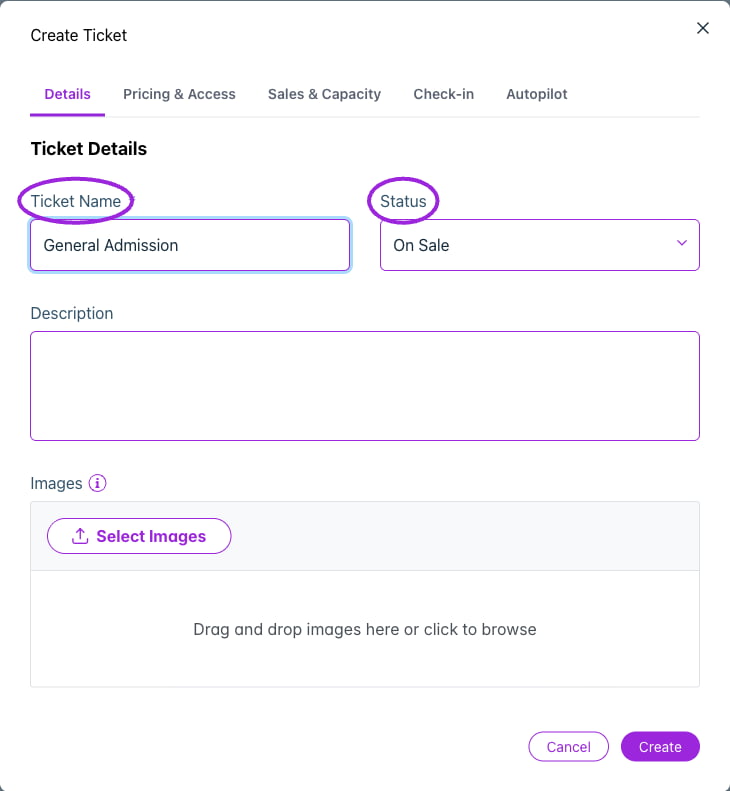
Create Ticket → Details contains the ticket name, status, description, and images. This example is an unsaved demo ticket.

Create Ticket → Details contains the ticket name, status, description, and images. This example is an unsaved demo ticket.

Pricing & Access

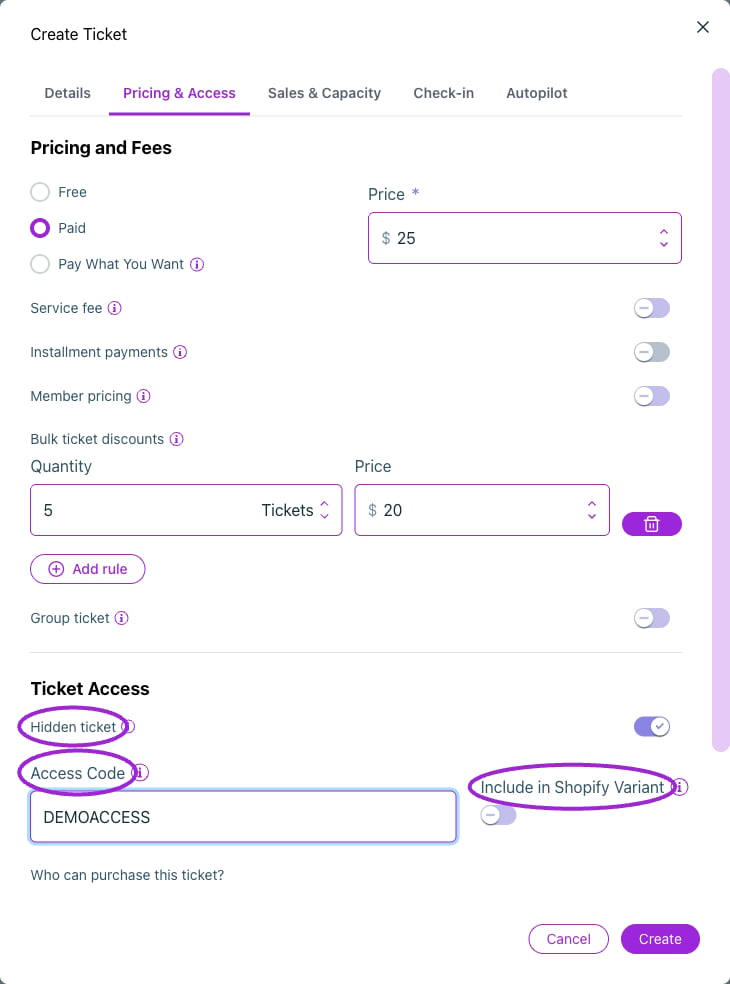
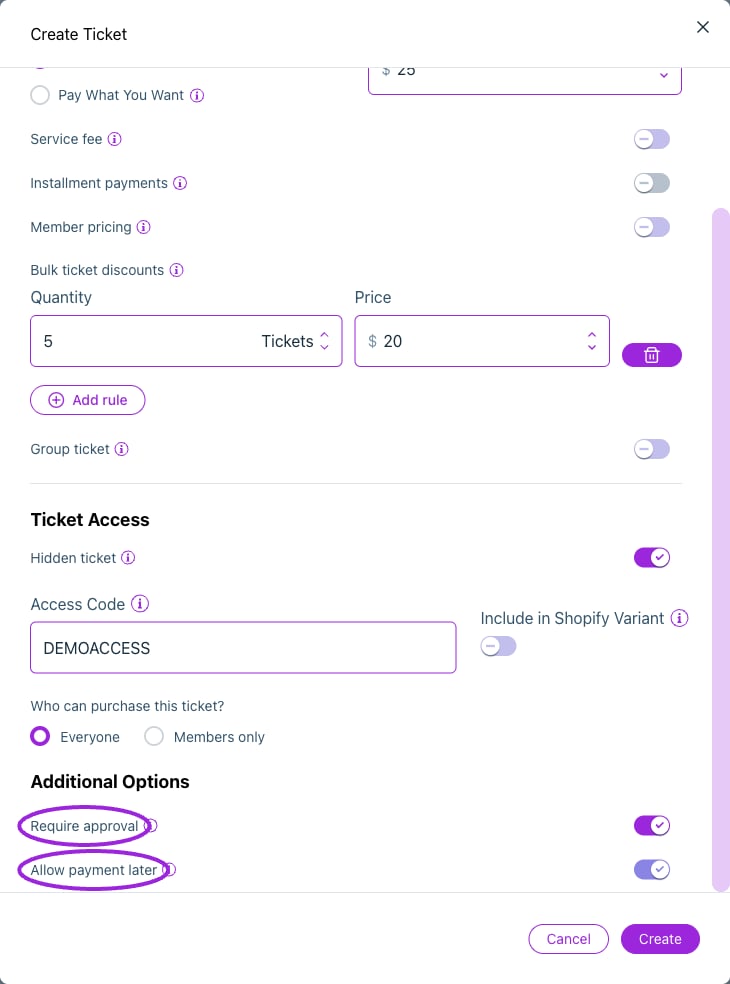
Hidden tickets can use an access code. Shopify events also offer Include in Shopify Variant.
Hidden tickets can use an access code. Shopify events also offer Include in Shopify Variant.

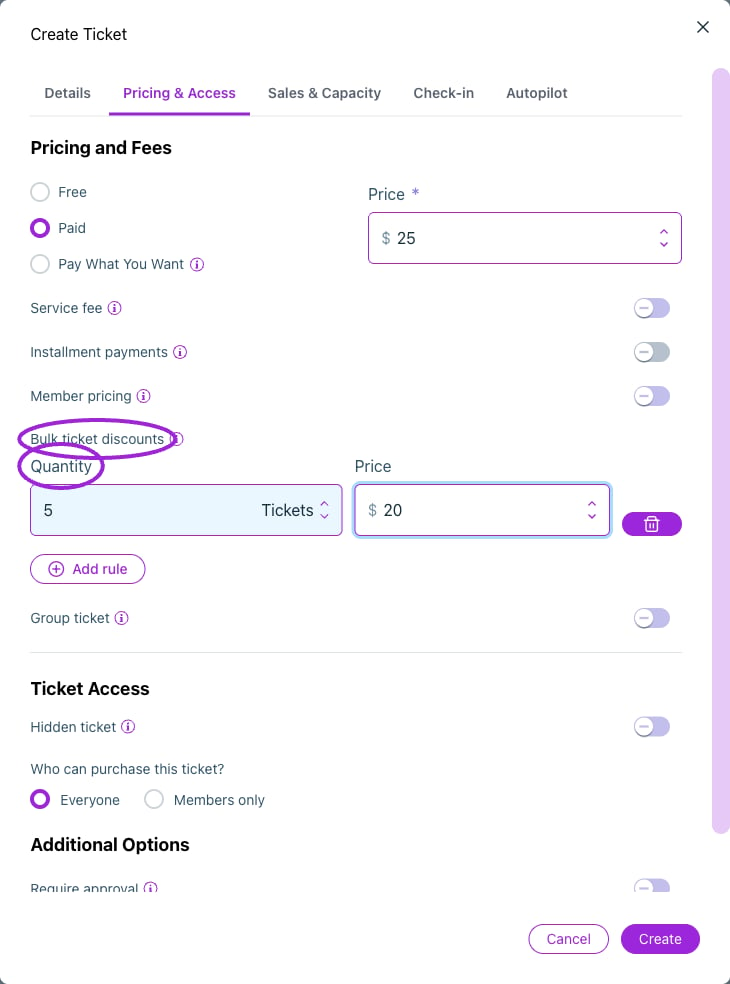
Add a bulk pricing rule: this example changes the unit ticket price to $20 when the quantity reaches five tickets.
Add a bulk pricing rule: this example changes the unit ticket price to $20 when the quantity reaches five tickets.

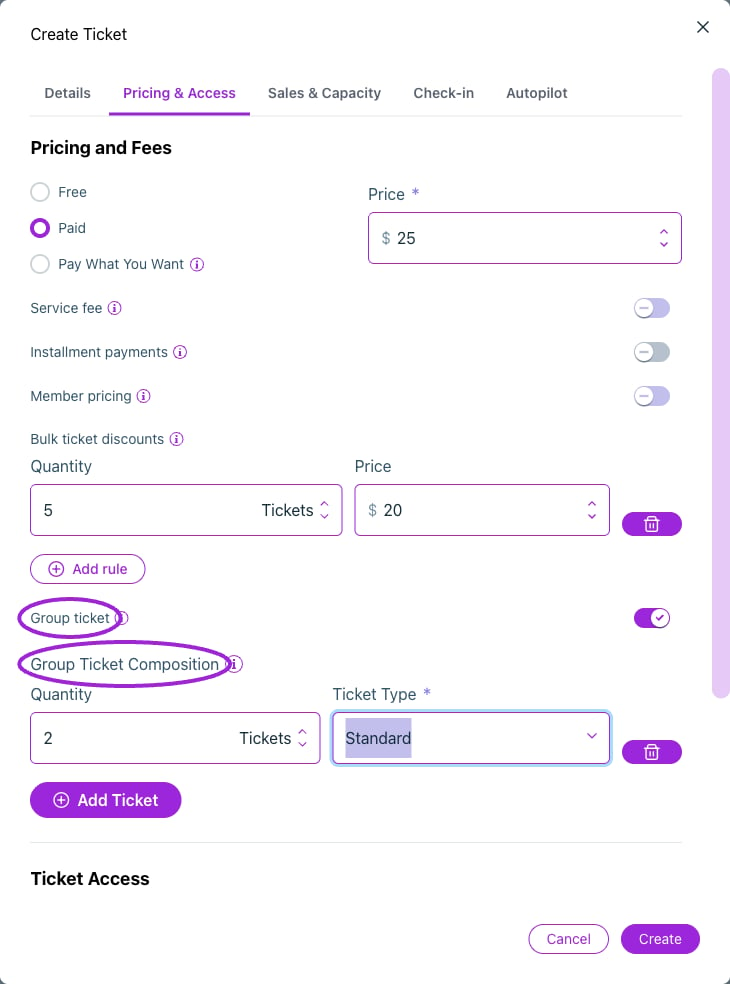
A group ticket bundles quantities of saved ticket types. This example includes two Standard tickets.
A group ticket bundles quantities of saved ticket types. This example includes two Standard tickets.

Require approval controls pending registration; Allow payment later provides the later-payment option.
Require approval controls pending registration; Allow payment later provides the later-payment option.

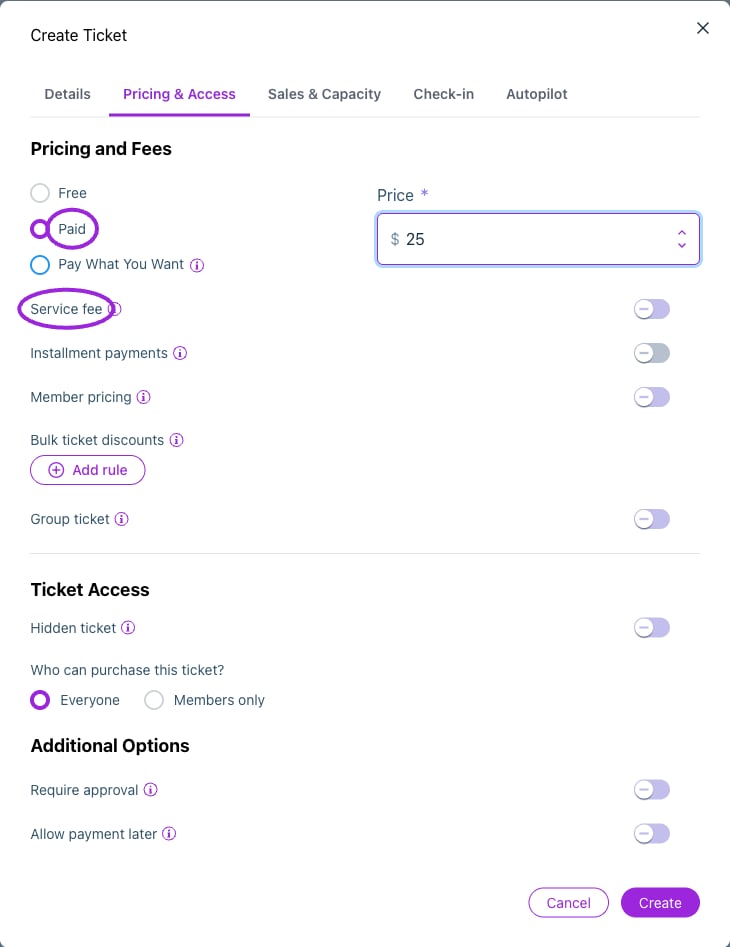
Pricing & Access offers Free, Paid, and Pay What You Want. A paid ticket has a fixed price, with service fees configured separately.

Pricing & Access offers Free, Paid, and Pay What You Want. A paid ticket has a fixed price, with service fees configured separately.

Sales & Capacity

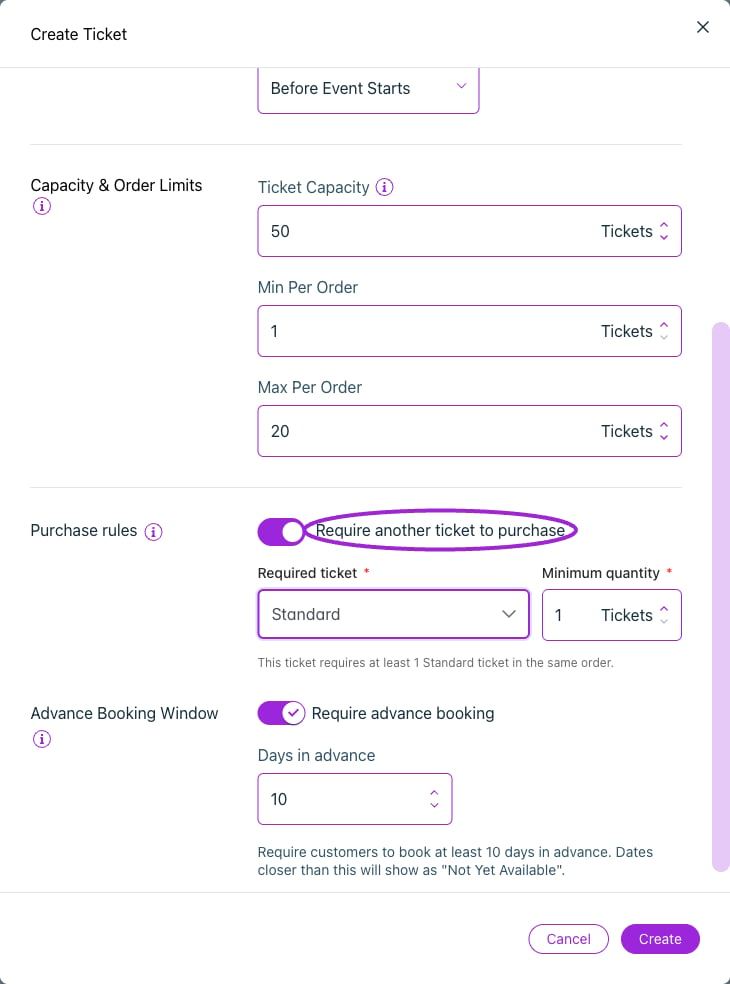
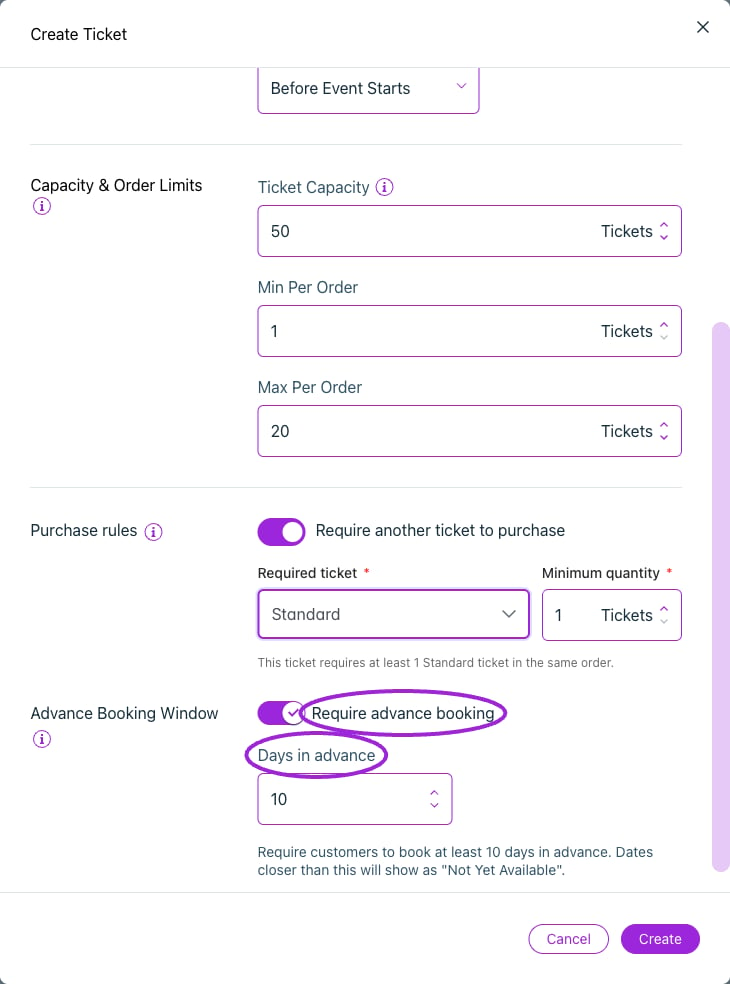
Require a minimum quantity of another ticket in the same order. This example requires one Standard ticket.
Require a minimum quantity of another ticket in the same order. This example requires one Standard ticket.

Require advance booking sets the minimum number of days before the event when this ticket can be bought.

Require advance booking sets the minimum number of days before the event when this ticket can be bought.

Review event capacity, ticket capacity, seat availability, waitlist access, sales dates, and order limits together. A ticket can have remaining stock and still be unavailable because another rule applies.

Check-in

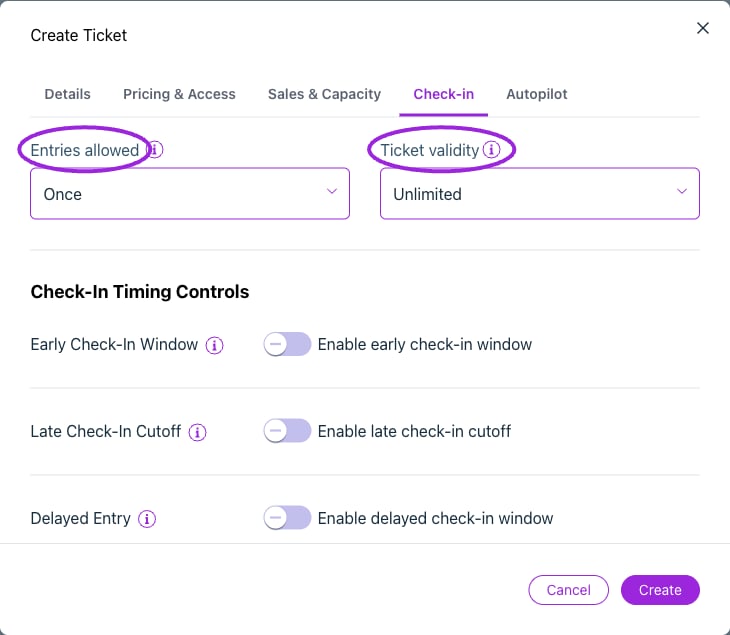
Control how many times a ticket can be scanned and its validity after purchase.
Control how many times a ticket can be scanned and its validity after purchase.

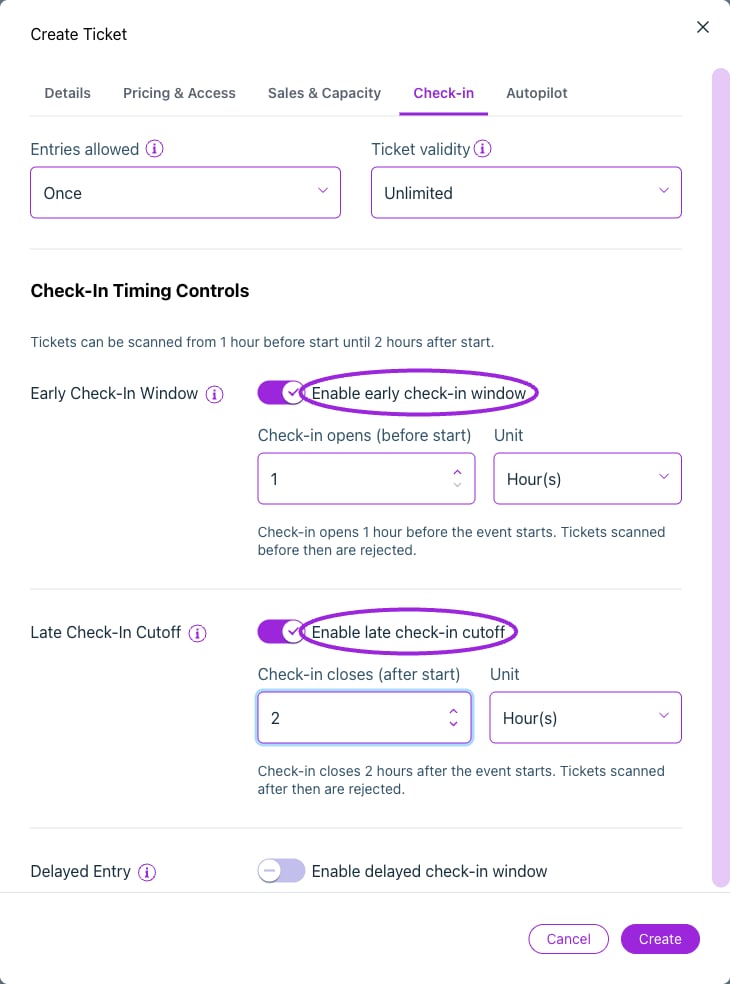
Set the opening time before the event and the cutoff after it starts. A cutoff alone does not prevent early scans.
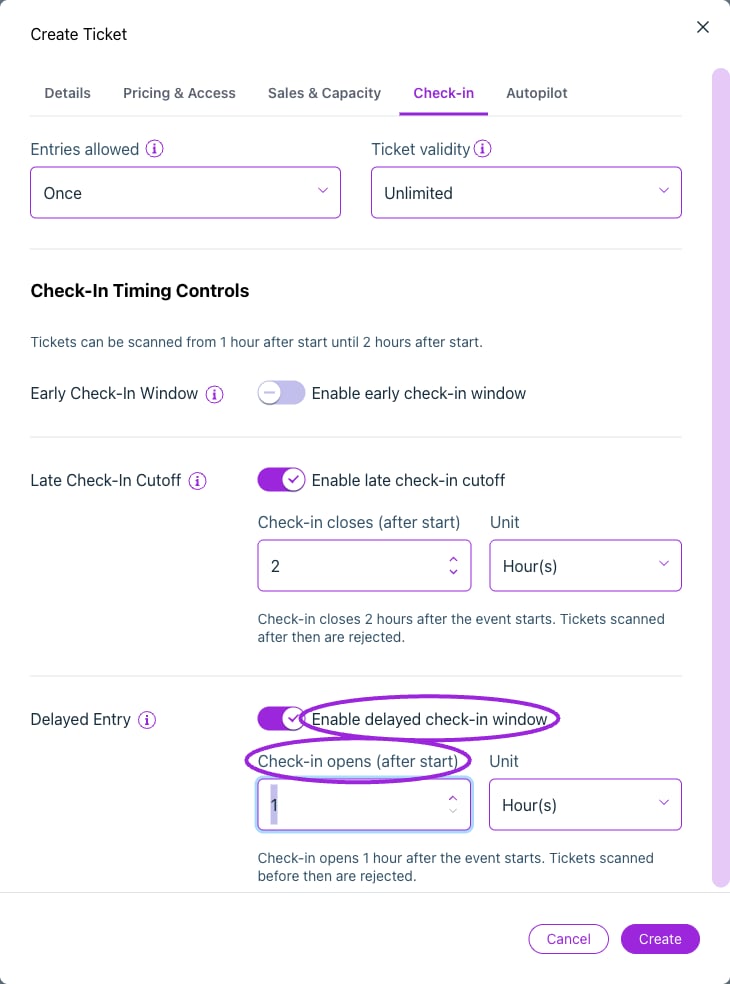
Set the opening time before the event and the cutoff after it starts. A cutoff alone does not prevent early scans.

Delayed entry opens check-in after the event starts. If both opening rules are enabled, delayed entry takes priority.

Delayed entry opens check-in after the event starts. If both opening rules are enabled, delayed entry takes priority.

These controls affect admission, not sales. Keep the effective opening earlier than closing and test before, within, and after the permitted window. Current day-editor label mismatch: the control labeled Stop check-in after a while, with Until, currently saves the delayed-opening rule. It opens check-in after the event starts; it does not close check-in. Limit how long entry stays valid currently saves the late cutoff relative to event start. Use the main editor’s explicit opening/closing fields to review these rules and test the actual scan window.

Autopilot and seating

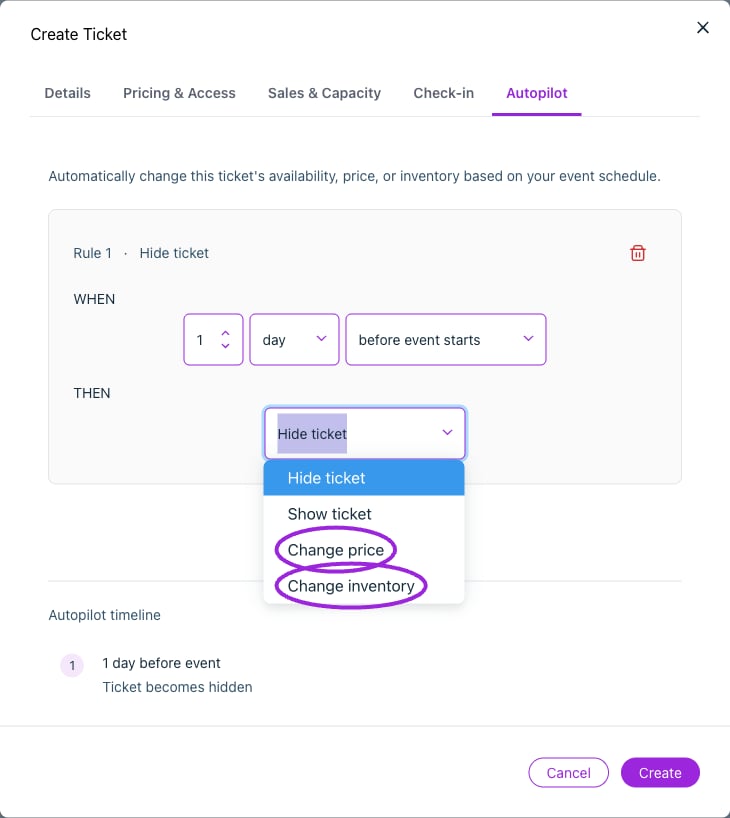
Autopilot can hide or show a ticket, change its price, or change its inventory.

Autopilot can hide or show a ticket, change its price, or change its inventory.

Autopilot rules have an enabled switch after saving, a number, minutes/hours/days, a timing of before event starts or before event ends, and one action: Hide ticket, Show ticket, Change price, or Change inventory. Price and inventory actions require the new value. Review conflict messages before saving; remove obsolete rules. In Seat Categories, select every category this ticket can book. Multiple ticket types can share a category, such as Adult and Child pricing for the same seats. A category color or label alone does not assign a price. See seating selection.

Additional controls in the day editor
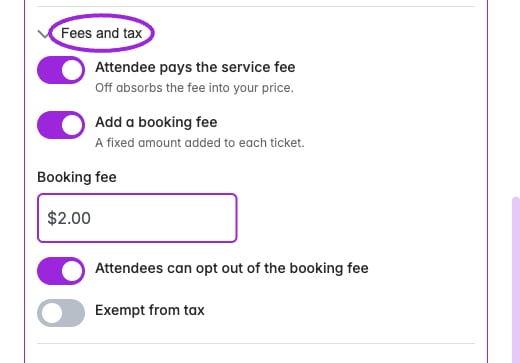
Custom-day Fees and tax can pass or absorb service fees, add a fixed booking fee, allow opting out, and exempt the ticket from tax. This example is unsaved.

Custom-day Fees and tax can pass or absorb service fees, add a fixed booking fee, allow opting out, and exempt the ticket from tax. This example is unsaved.

Promo codes

Create a code under the ticket list. Configure its percentage or fixed discount, ticket applicability, discounted-ticket limit, start/end schedule, and optional minimum quantity. Multi-Event Code and Shopify synchronization are separate controls. See the complete promo-code guide, including customer-tag mapping.

Save and test

Save the ticket and event, or the date when editing a custom day. Update the linked Shopify product when its offer changes. Test a valid order and the limit cases that apply to your setup. Inspect ticket names, quantities, prices, fees, the occurrence, any seat assignment, and delivered tickets. For step-by-step setup and screenshots, continue with Ticket Setup.