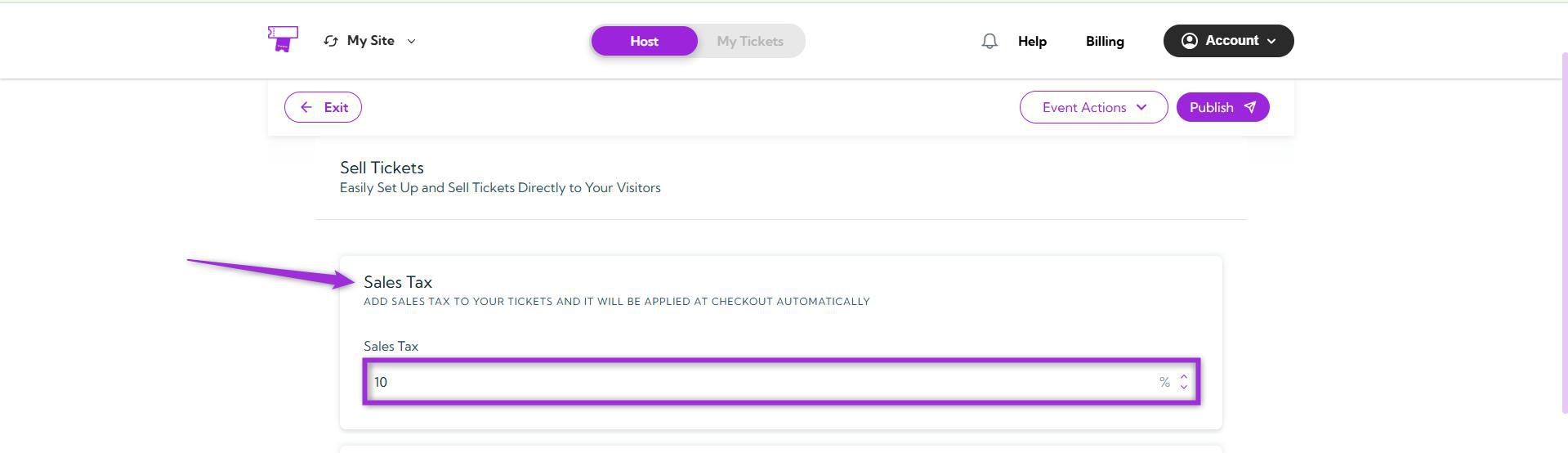
Sales Tax
Add a sales tax to your tickets, and it will be automatically applied at checkout. This helps ensure that all ticket prices include the required tax for your region.For example, if your ticket price is 50 dollar and you set a 10% sales tax, the total amount charged at checkout will be 55 dollar.
INFO: Leave this as it is if you don’t need to apply any tax to your ticket sales.
Tickets
Create tickets for your event to define how attendees can register or gain access. You can set up free, paid, or donation-based tickets depending on your event type. Each ticket can have its own name, price, quantity, and sales start and end date — giving you full control over availability and pricing.Currency
Select the currency in which you want to sell your tickets. You can choose from multiple options such as USD (dollar), EUR (€), JPY (¥), GBP (£), AUD (AU) based on your event’s location and payment preferences.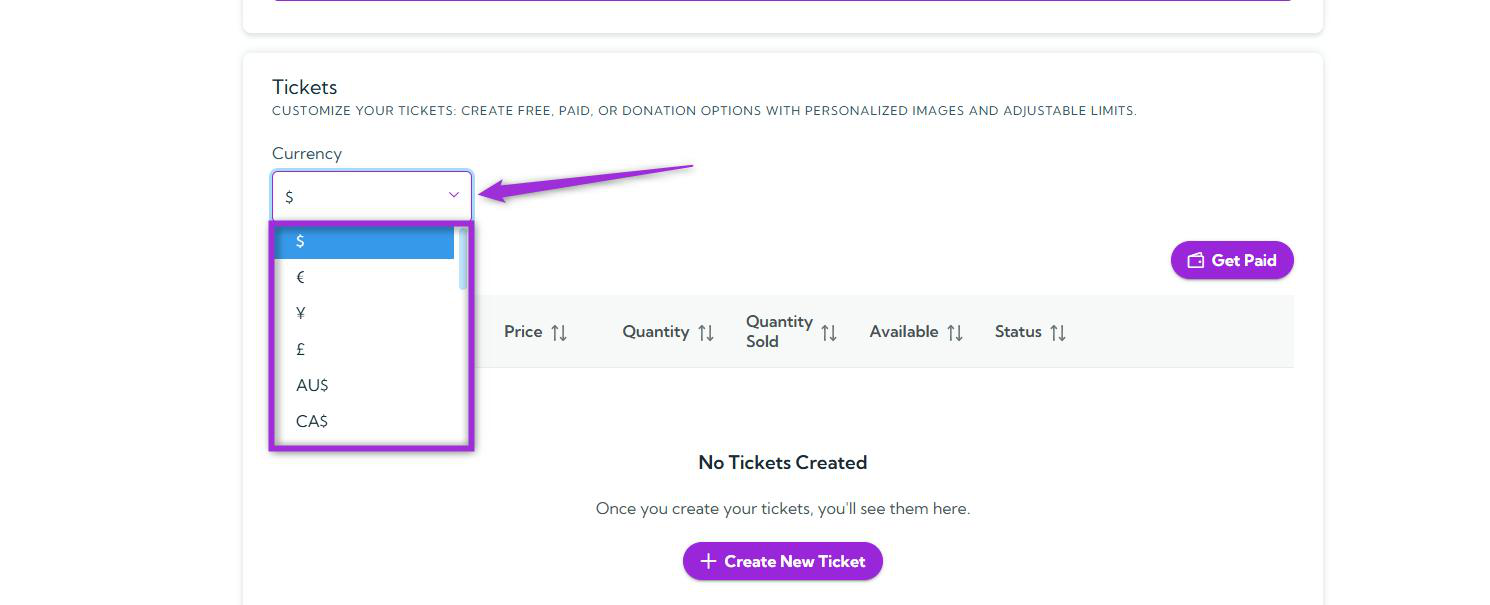
Get Paid
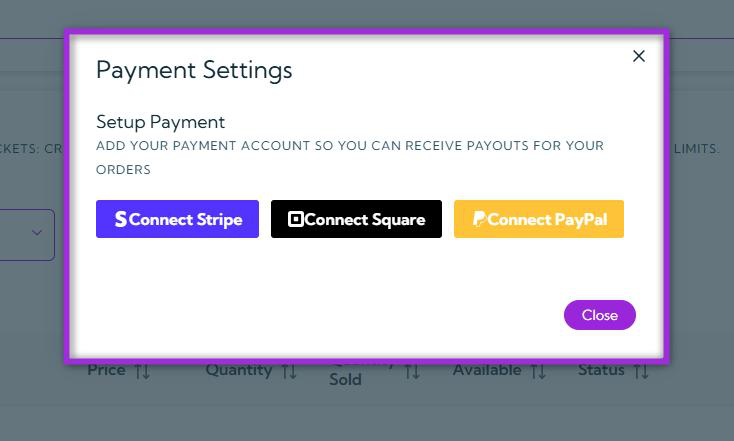
Click the Get Paid button to set up how you’ll receive payouts from your ticket sales.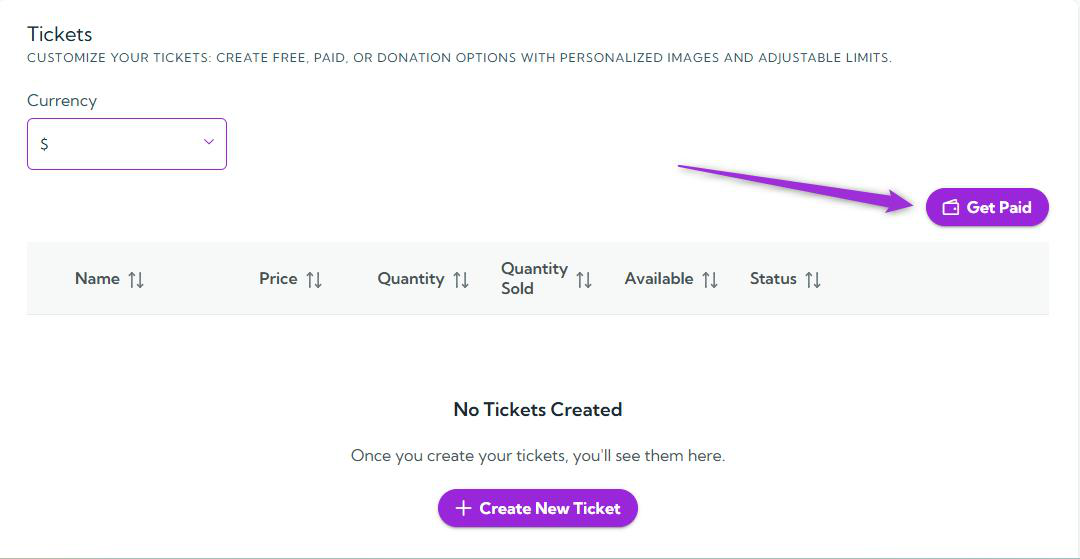
- Connect Stripe
- Connect Square
- Connect PayPal
Create Ticket
Click the Create New Ticket button to start creating a new ticket for your event.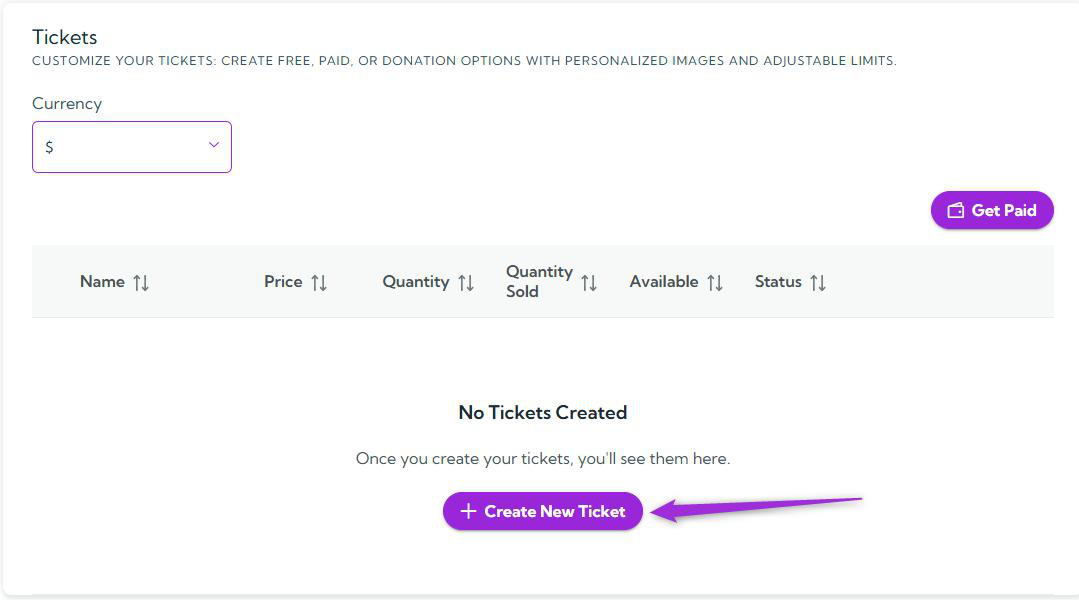
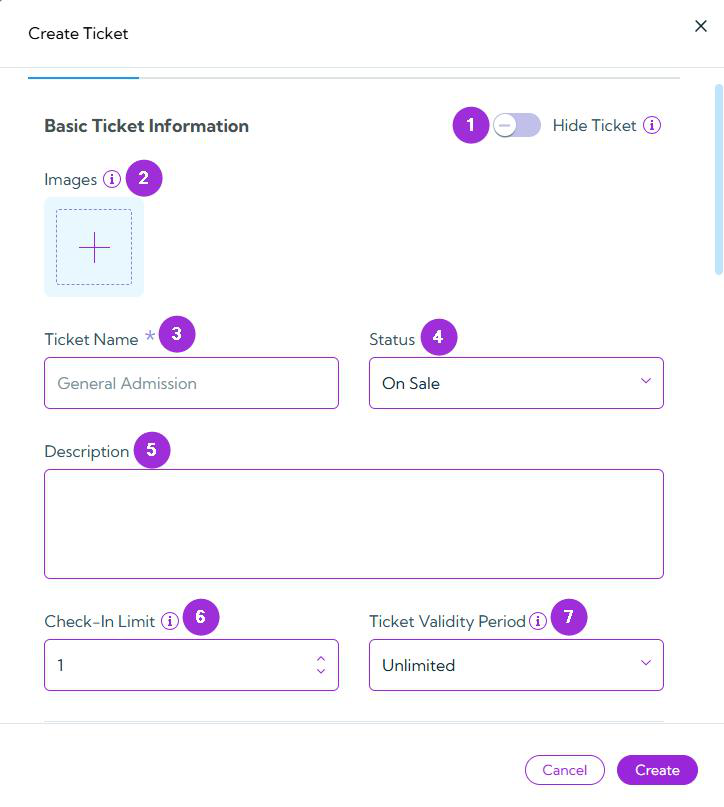
Basic Ticket Information
This section allows you to define the essential details for your ticket — from its visibility and visuals to access rules and validity duration.Fields
Pricing and Fees
Choose how you want to charge for this ticket:Free
Select this option if you would like your attendees to register for the event at no cost.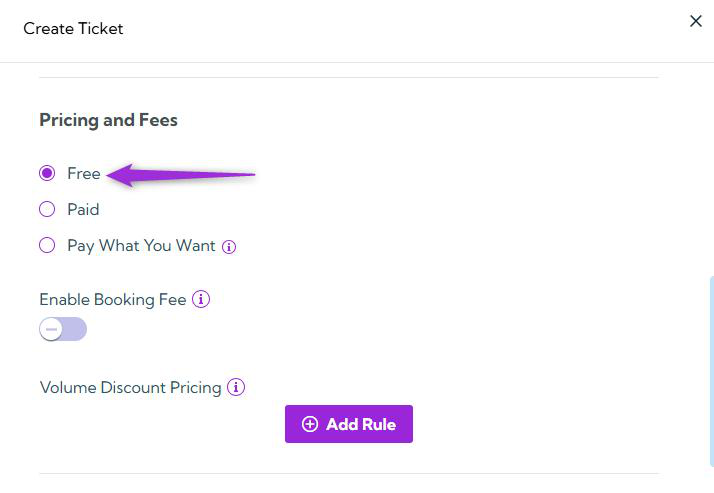
Paid
This option activates the Price field, which allows you to define the ticket cost that attendees will pay for registering for the event.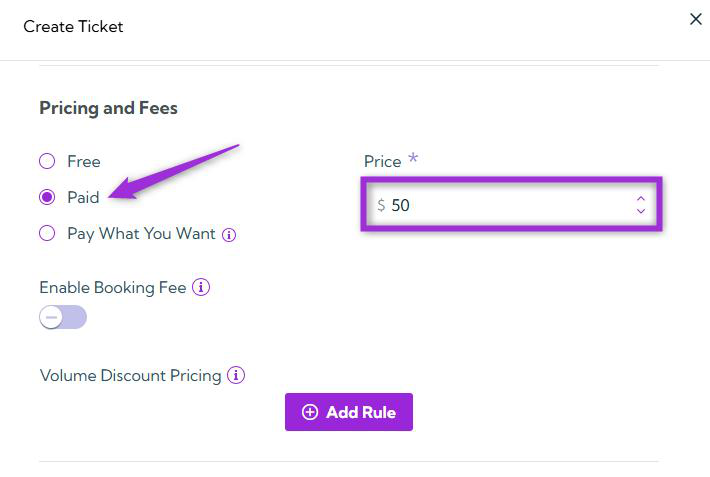
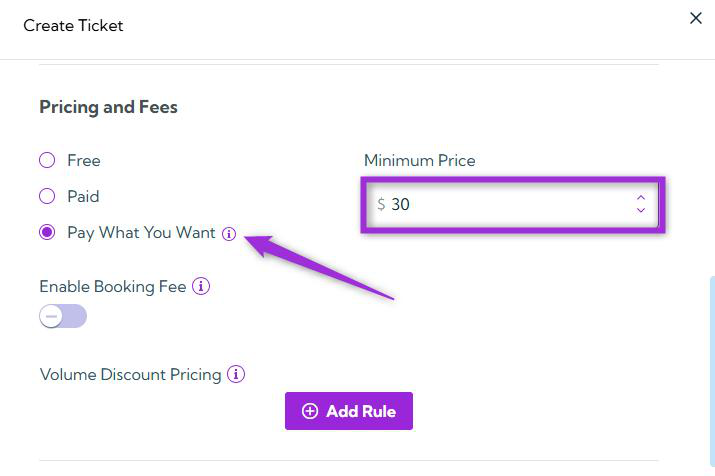
Pay What You Want
When you select this option, attendees have the flexibility to decide how much they wish to pay.Additionally, you can specify a minimum amount in the Minimum Price field.
For example, if you set the minimum price to 30, attendees can choose to pay 30 or any higher amount.
Enable Booking Fee
Toggle this option ON to apply a custom booking fee to each ticket. When enabled, the Custom Booking Fee field becomes active, allowing you to enter a fixed amount. The specified fee will then be added to the ticket price.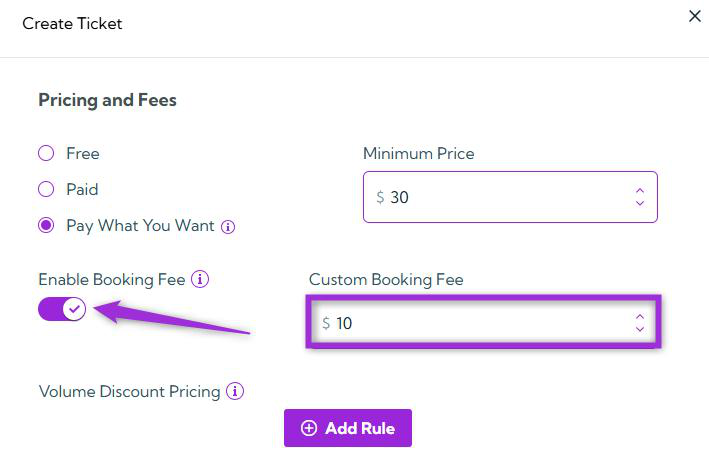
Volume Discount Pricing
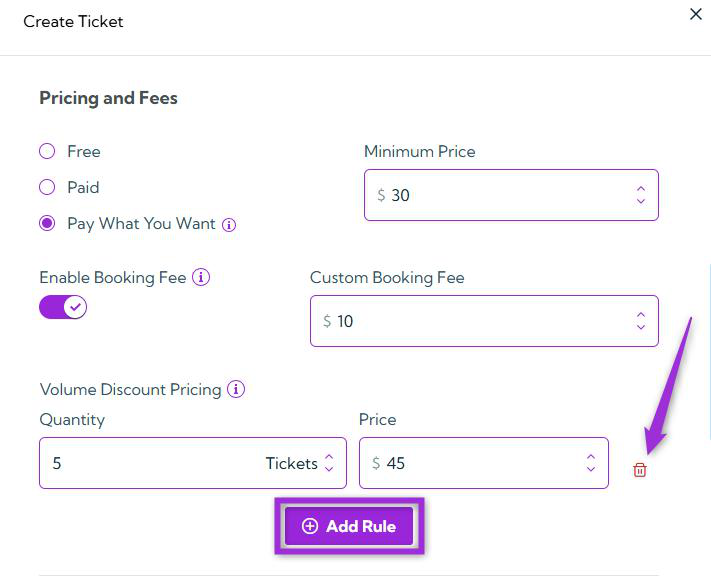
Use this section to define pricing rules for bulk ticket purchases. Click the Add Rule button to create custom quantity and price pairs. For instance, if 1–4 tickets are priced at 50 each, you can add a rule to set the price at 45 each when 5 or more tickets are purchased.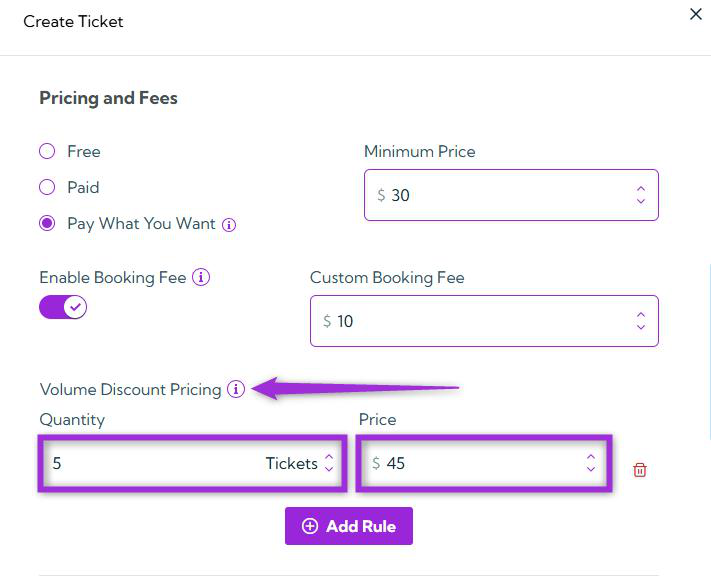
INFO: Add more rules anytime using Add Rule, or remove them using the Trash icon.
Group Ticket Settings
This section lets you bundle multiple ticket types together under one group ticket — ideal for family packages, team passes, or combo offers that include different ticket types at a single price.Enable Group Ticket
Enable this toggle to create a bundled ticket that includes multiple tickets of different types. Attendees will receive the individual tickets within the group rather than a single group ticket.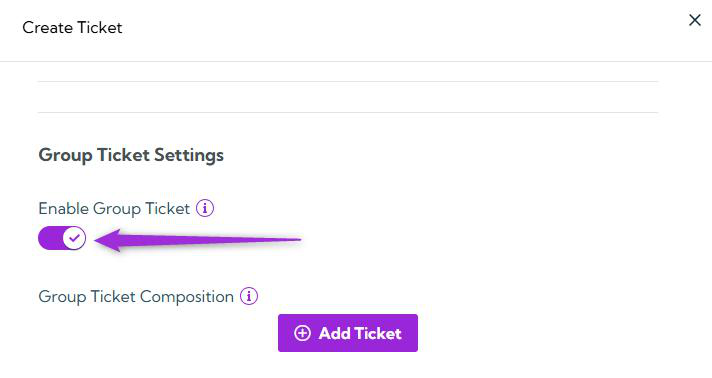
Group Ticket Composition
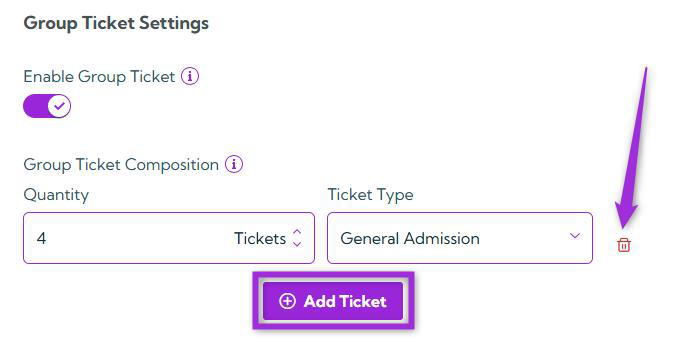
After enabling the “Enable Group Ticket” toggle, use this section to define what the group includes by clicking on the Add Ticket button.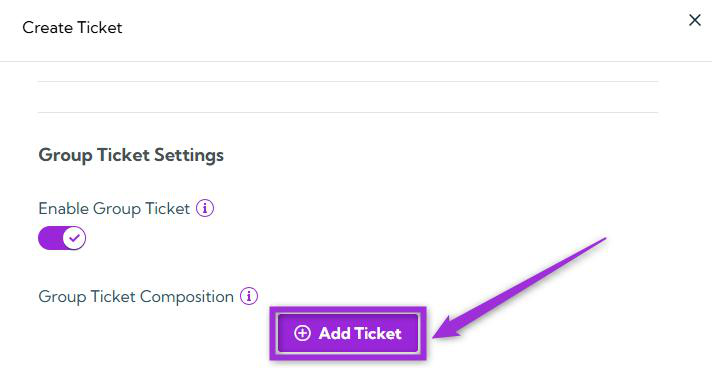
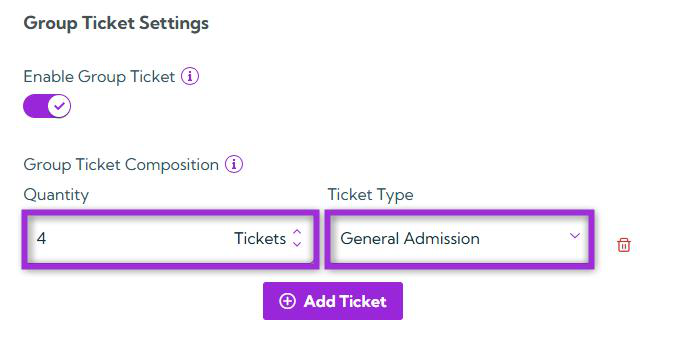
INFO: You can similarly add additional tickets at any time by clicking the Add Ticket button, or remove existing ones whenever needed by clicking the Trash icon
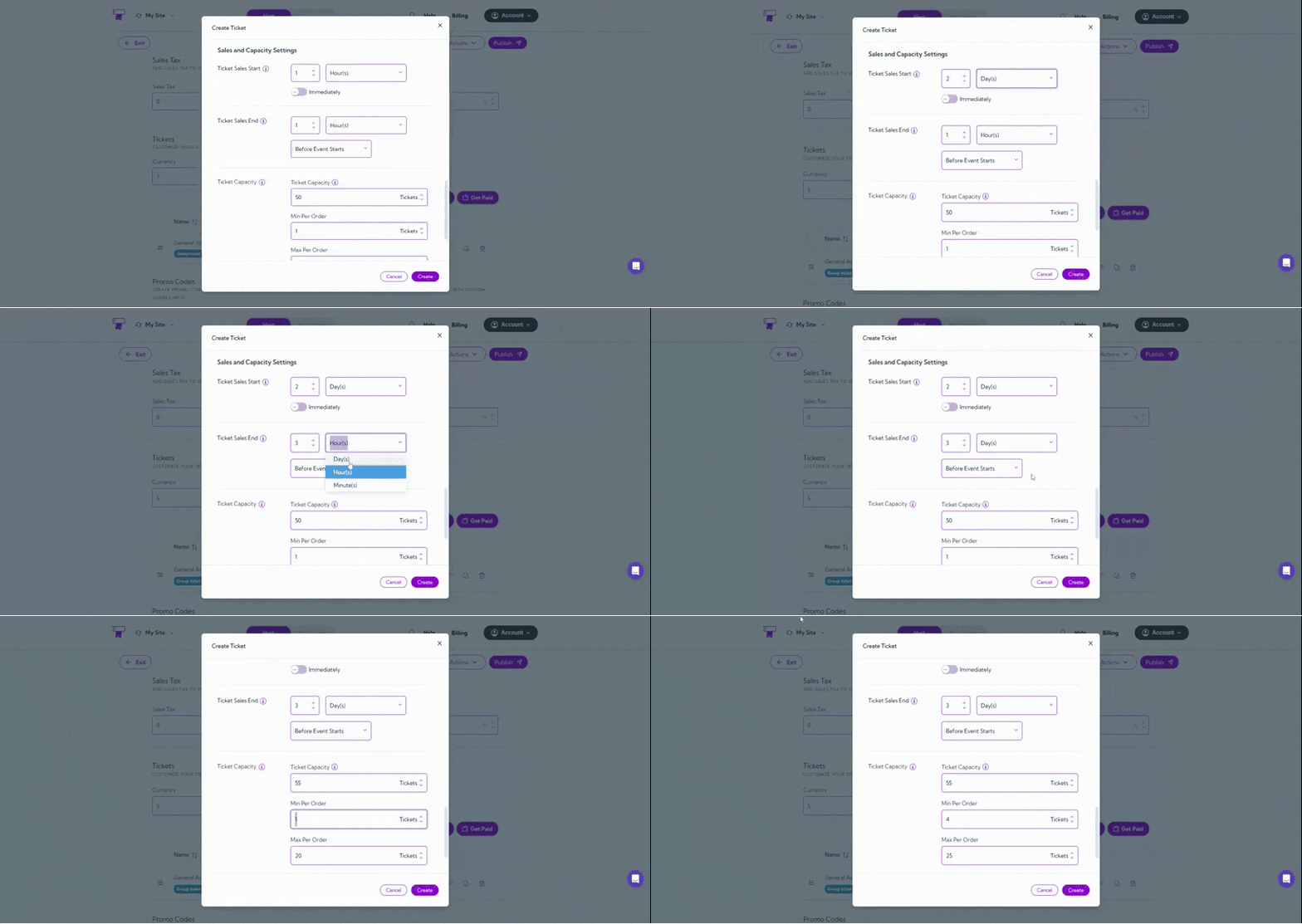
Sales and Capacity Settings
This section helps you control when your tickets go on sale, when they stop selling, and how many can be sold — ensuring you stay within your event’s capacity limits and manage ticket availability effectively.Ticket Sales Start
Set when ticket sales should begin relative to the event’s start time.- Specify a value in days, hours, or minutes before the event.
- Alternatively, toggle the Immediately button ON to start sales instantly, which disables manual input.
Ticket Sales End
Set when ticket sales should stop, either before the event starts or before it ends.- Specify a time offset using days, hours, or minutes according to your event’s requirements.
Ticket Capacity
Define how many tickets can be sold for this type. You can also set:- Min Per Order: Minimum number of tickets a buyer must purchase.
- Max Per Order: Maximum number of tickets per purchase.
Approval & Payment Settings
This section allows you to control how registrations are approved and when payments are collected — giving you more flexibility in managing attendees and payment timing.Require Approval
Enable this option if you want to manually approve registrations before confirming attendance. Attendees will appear as Pending until approved, which applies to both free and paid tickets.Allow Payment Later
Toggle this ON to let approved guests complete their payments at a later time. Ideal for corporate or sponsor-based registrations where payment is collected post-approval.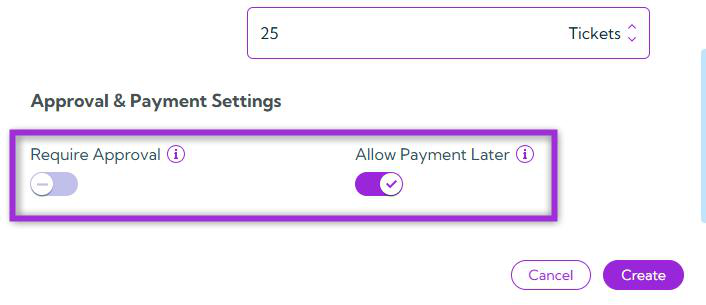
Autopilot
The Autopilot tab allows you to create automated rules that modify ticket properties based on time triggers relative to your event’s start or end time. This feature helps you manage ticket visibility, pricing, or status automatically — without manual intervention.How It Works
Click the Add Rule button to create your first automation rule.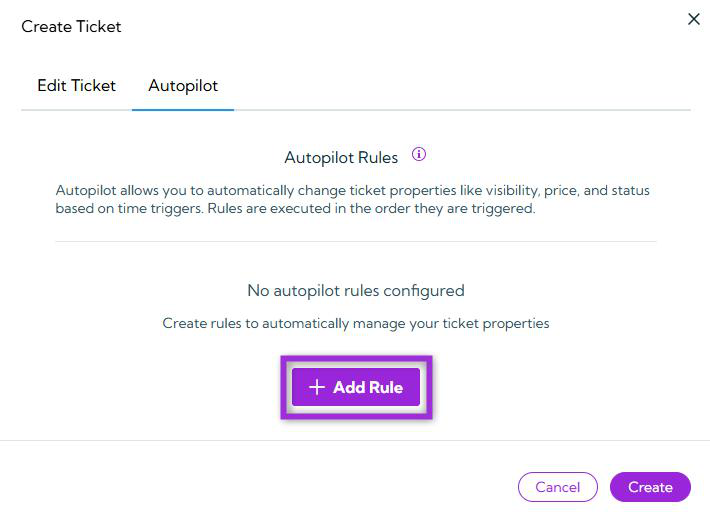
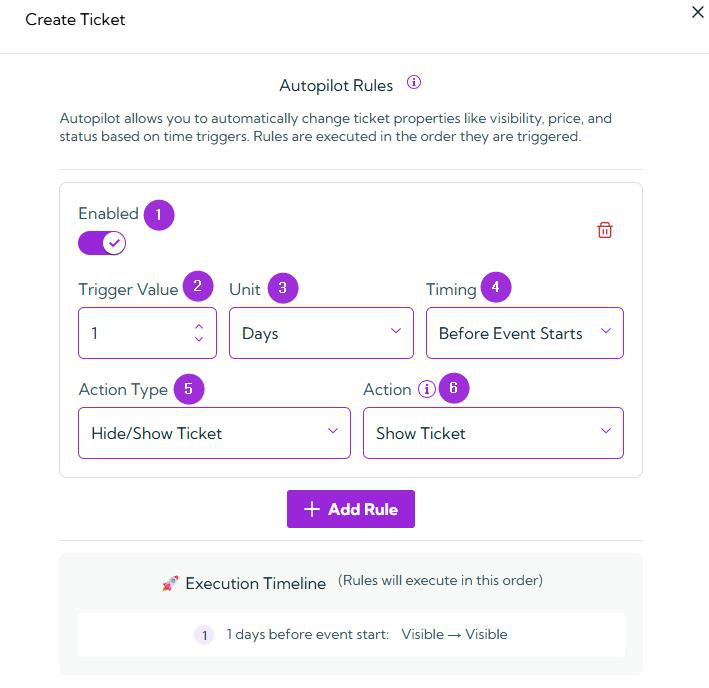
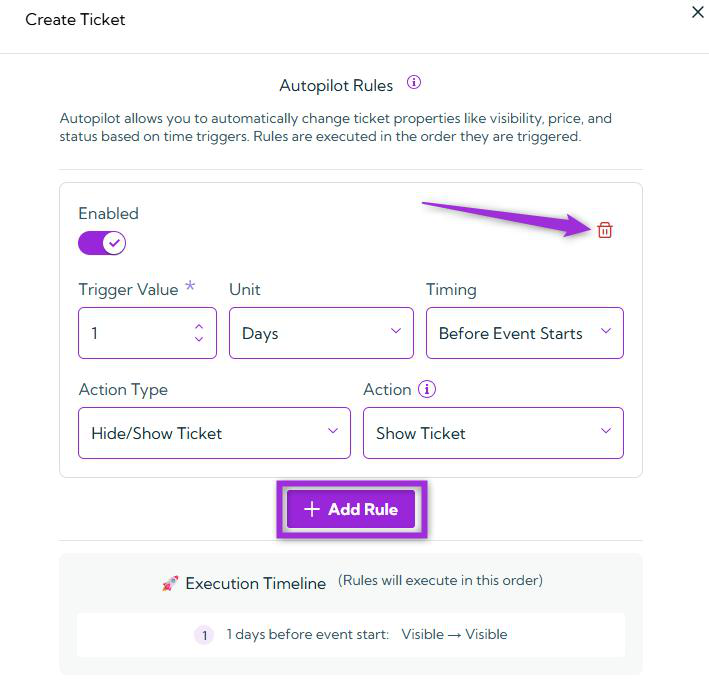
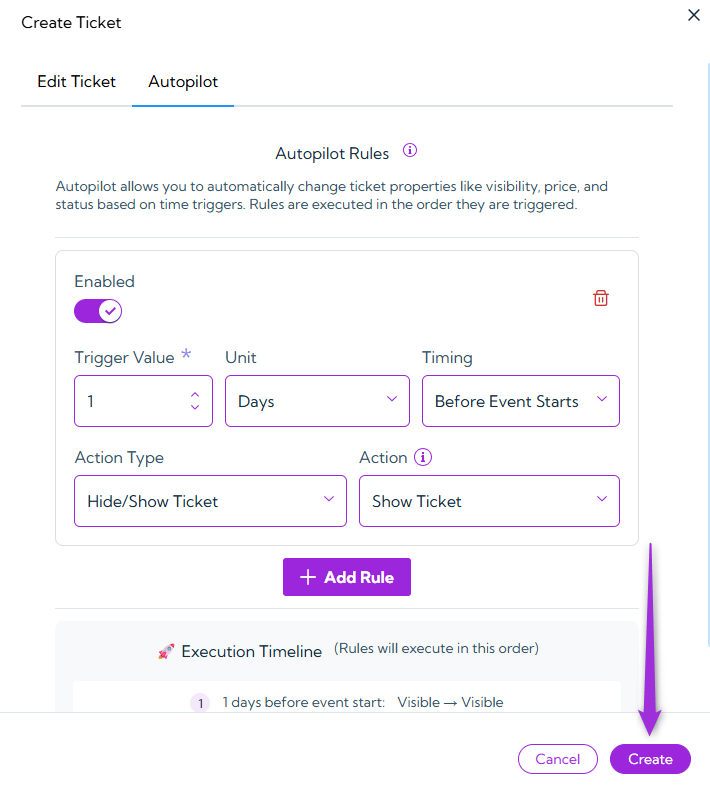
INFO: You can similarly add additional rules at any time by clicking the Add Rule button, or remove existing ones whenever needed by clicking the Trash icon.Click on the Create button to proceed. Your ticket will be created successfully.
Manage Tickets
Once your tickets are created, you can manage them directly from the Tickets list. You can edit, duplicate, or delete tickets as needed — giving you full flexibility to keep your event details accurate and organized.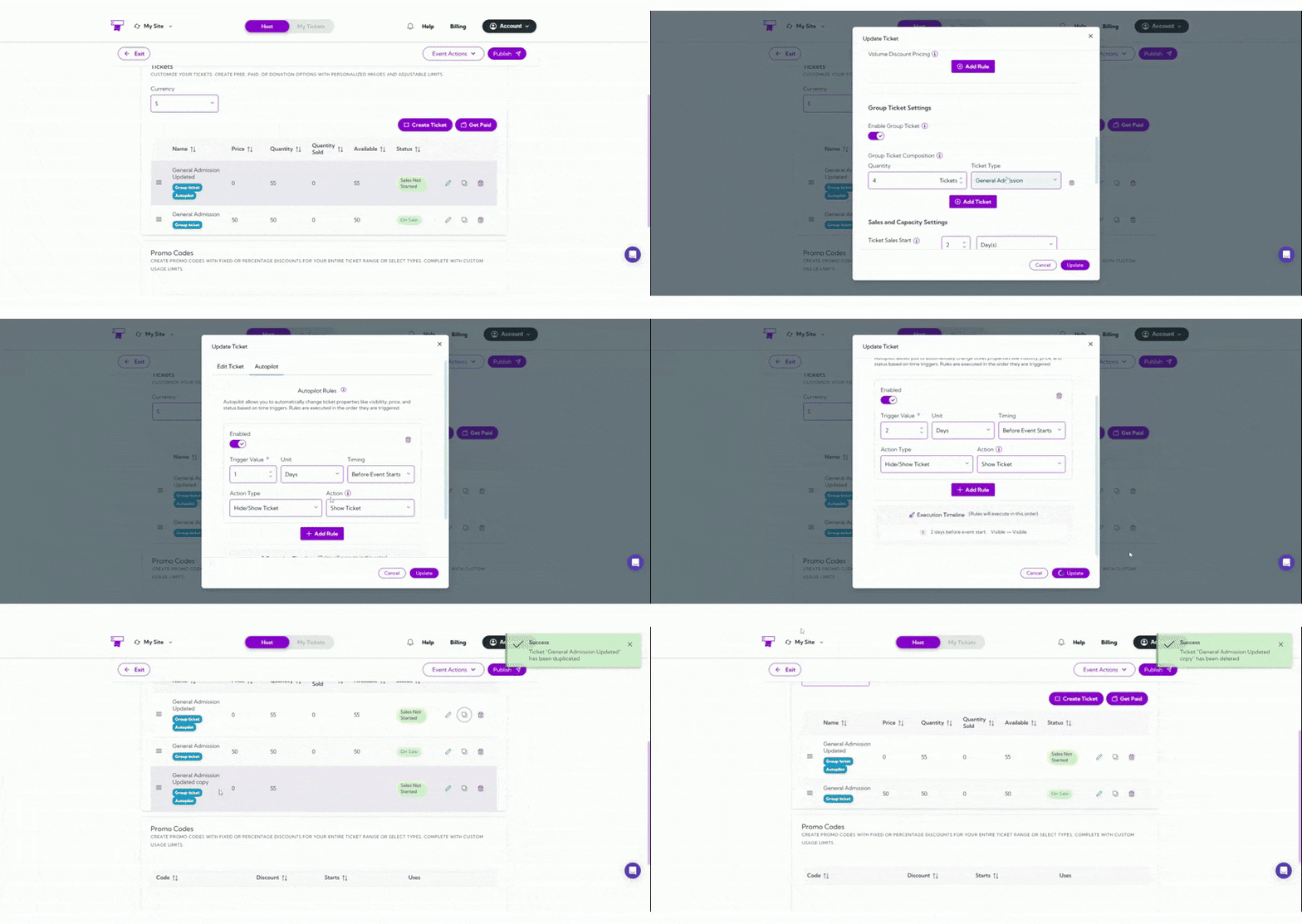
Promo Codes
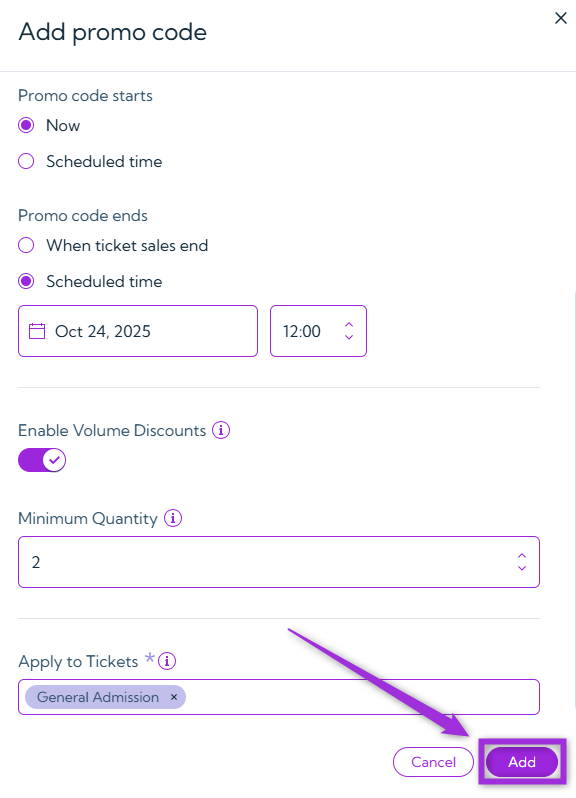
Promo Codes allow you to offer discounts or special pricing to your attendees. You can create limited-time offers, early-bird discounts, or group incentives to drive more ticket sales and reward specific audiences. To create a new promo code, click Create Promo Code.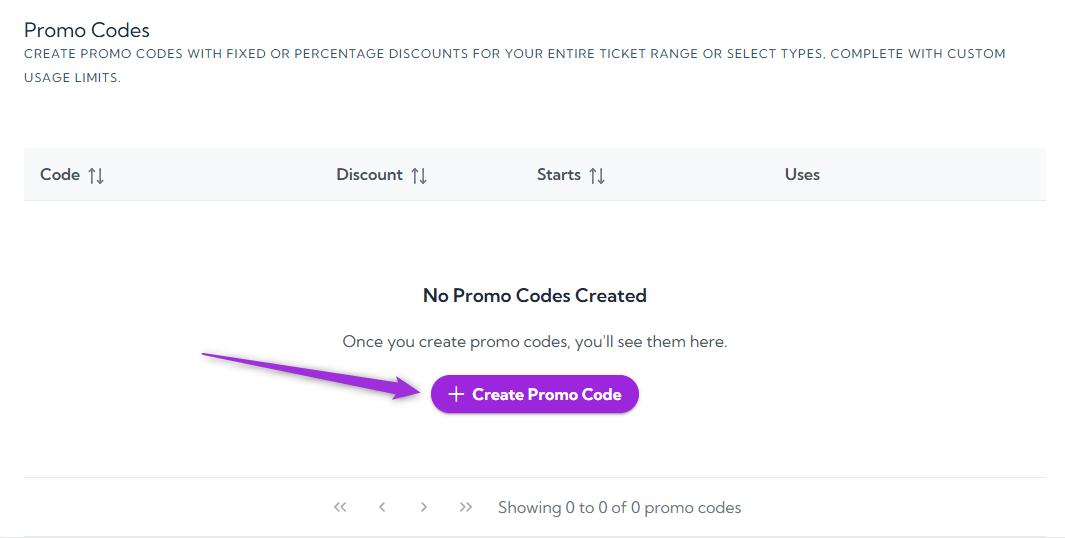
Promo Code Setup Fields
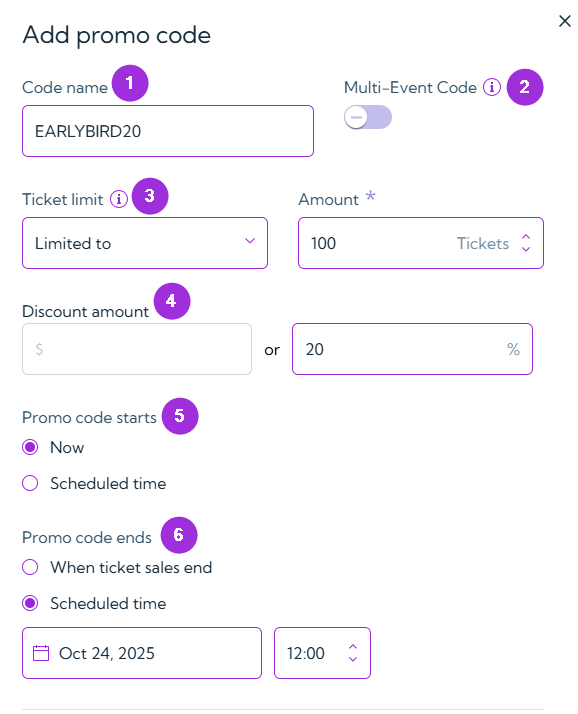
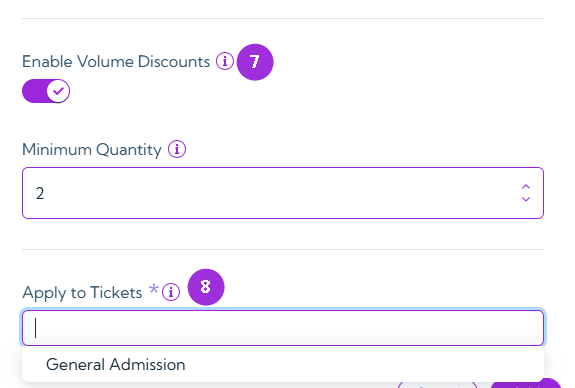
Manage Promo Codes
After creating promo codes, you can manage them directly from the Promo Codes list. You can copy, view usage, edit, or delete any existing promo code — helping you stay organized and monitor how your discounts are performing.